En el libro "
The winner-take-all society", sus autores Robert H. Frank y Philip J. Cook estudian los motivos detrás del aumento de la disparidad de ingresos en ciertas profesiones. La explicación que sugieren los autores, es que en muchos campos opera un mercado en que la compensación está dada por la posición relativa, no por el rendimiento absoluto.
Por ejemplo, el corredor que gana la medalla de oro en los 100m planos en las olimpíadas recibe una cantidad de dinero (en contratos publicitarios) que es muchísimo mayor que la que recibe el segundo mejor, incluso cuando la diferencia en tiempo haya sido de centésimas de segundo. Este fenómeno también es frecuente en el mundo del
espectáculo, en que cientos de miles personas sueñan con ser estrellas millonarias, y sólo unas pocos lo son en realidad.
Otras profesiones recientemente se han unido a esta tendencia, incluídos abogados, ingenieros, médicos y científicos. Lamentablemente, uno de los problemas de este tipo de mercado es que la asignación de recursos que se produce en muchos casos es ineficiente, porque hay demasiada gente con ilusiones exageradamente altas que intenta alcanzar lo que para ellos es inalcanzable — y que sería más útil para la sociedad y para sí mismo haciendo otra cosa.
Por supuesto, mientras más competidores haya, mejor será el resultado de una selección competitiva, pero todo tiene un límite, y hay un punto en que comienzan a entrar muchos competidores que no tienen ninguna posibilidad, que sólo aumentan marginalmente la calidad del resultado, pero que a cambio malgastan su tiempo, sus recursos, y los recursos de otros.
Todos creemos ser mejores que el promedio
Una de las causas de que tanta gente entre en competencias que no puede ganar, es que los humanos tendemos a
sobreestimar profundamente nuestras capacidades. Los autores citan varios casos:
- Una noticia reciente reportaba que más del 60% de los jugadores de básquetbal de la primera división universitaria pensaba que llegaría a entrar a la NBA. Sólo el 5% lo consigue.
- La mayoría de las personas piensa que son más inteligentes y que conducen mejor que el promedio.
- Más del 70% de los encuestados entre estudiantes de liceo se consideró mejor que el promedio, y sólo el 2% debajo del promedio.
- El 94% de los profesores universitarios piensan que son mejores que el promedio de sus colegas.
La explicación es el conocido "
Efecto Lago Wobegon", nombrado en honor a un lugar ficticio donde "
todas las mujeres son fuertes, todos los hombres son apuestos, y todos los niños están por sobre el promedio".
La explicación desde la siquiatría es aplastantemente simple: pensar que uno es peor que el promedio no nos gusta, por lo tanto, una solución barata es pensar que uno es mejor que el promedio, total, no es tan fácil probar que uno está equivocado.
Consistente con esto, los autores citan un estudio en que se encontró que los pacientes con depresión clínica eran notablemente certeros a la hora de evaluar sus propias capacidades, mientras que la gente sana del grupo de control tendía a tener una proporción significativamente inflada de sus capacidades objetivas.
Este problema se ve exacerbado en nuestra generación, la "
Generation Me", que fue educada con máximas como "
cree en tí mismo y todo te resultará bien" y con una educación donde la auto-estima ciega (sin importar el rendimiento) se consideraba como un valor importantísimo, mucho más que el auto-control, por ejemplo. Para peor, y como notaba Adam Smith:
El desprecio del riesgo y la presuntuosa esperanza de éxito, no están en ningún período de la vida más activos que en la época en que la gente escoge sus profesiones.
Una gota de realidad en un océano de sueños, creo que no nos vendría nada de mal a algunos. Por otra parte, lo de que todos pueden lograr lo que se propongan es una idea profundamente arraigada en nuestra generación, y no creo que de la noche a la mañana todos la abandonemos. Al menos yo no lo he hecho aún.
The Winner-take-all Society por Robert H. Frank y Philip J. Cook. Penguin Books, 1996.
 I wanted to recommend a couple of funny books for Sunday afternoons or sleepless nights.
The first one, "
I wanted to recommend a couple of funny books for Sunday afternoons or sleepless nights.
The first one, "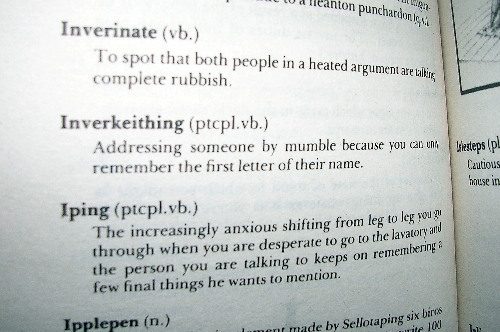 The second is about"
 If you have any suggestion about a similar book, please leave a comment. ¡Thank you!
 Hedwig and the Angry Inch is a musical from 1998 and a film that opened in 2001. Both were written, directed and starred by John Cameron Mitchell. The history is about a German transgender, Hedwig who tours the USA with his Glam Rock band The Angry Inch. The band plays a series of concerts in low-profile venues, trailing Tommy Gnosis, whom them accuse of stealing all their songs.
 There are funny situations during the movie, mostly caused by the type of show of Hedwig's band, which is rock with very explicit lyrics that clash with the prosaic patrons of the ice cream shops and restaurants where they perform. There are also deeply touching moments, such as a history about the origin of love based on a tale by Aristophanes.
 In the novel from Mark Haddon "The Curious Incident of the Dog in the Night-Time" the main character is a 15 years-old autistic child that discovers the corpse of his neighbors' dog in the frontyard. ¿Who could have committed this horrible crime?